When the roulette history board shows past spins, players bet the opposite
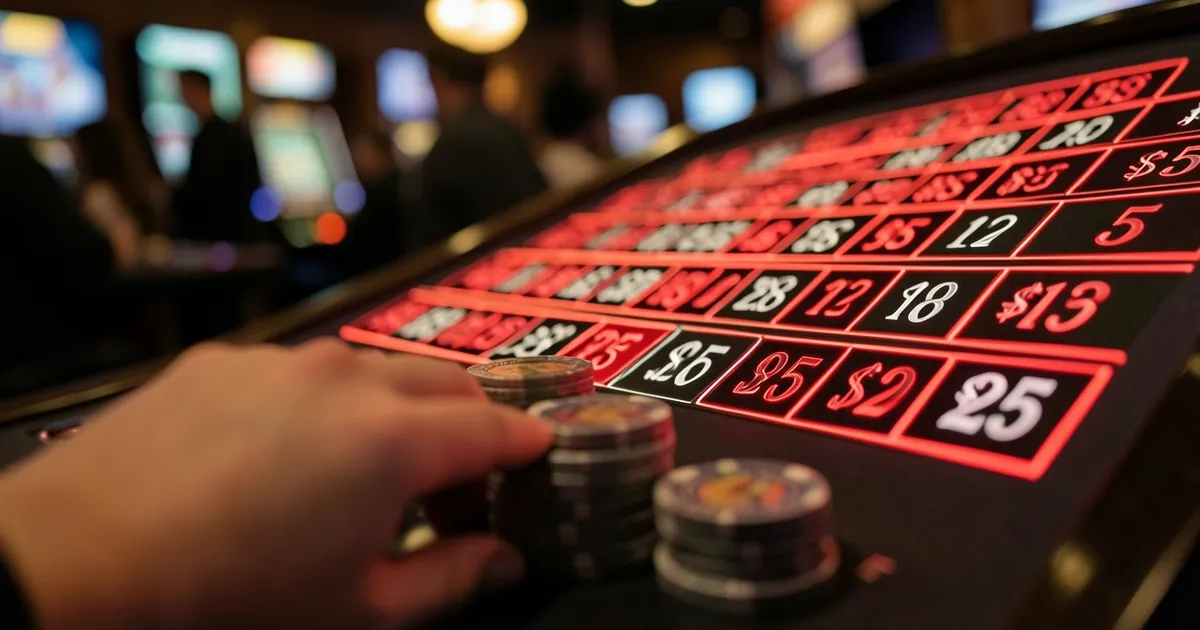
Casino history boards show the last 10 to 20 results, and a large share of players read them as a forecast rather than a record. The pattern is consistent across table games: when the board shows six reds in a row, a measurable slice of players switch to black on the next spin, convinced the wheel owes them a correction. The board isn't the problem. The reflex it triggers is.
The board is a memory aid, not a model
European roulette wheels produce red or black at roughly 48.6% each, with the single zero taking the rest. That figure holds on every spin regardless of what the previous 20 spins did. A wheel has no memory, no quota, and no debt to settle.
History boards exist for two legitimate reasons: verifying a session's results and giving players something to look at between spins. They display past outcomes. They don't predict future ones. When a player sees a streak and bets against it, they're treating a display feature as a probability engine — and the display was never built to do that.
Why the streak feels like a signal
The pull is psychological, not mathematical. Random sequences contain clusters, and humans are bad at accepting that. Ten blacks in a row looks like a pattern that must break. Statistically, it's just one of 1,024 equally likely 10-spin sequences on a two-outcome bet.
The same misreading shows up elsewhere. In our look at poker hand history that only rewinds five hands, 57% of players reviewed the wrong street entirely — the tool was there, the reading was off. History features consistently get treated as predictive when they're descriptive.
There's also the recency trap. A player who just watched six reds weights those spins far more heavily than the 500 spins before them, even though the earlier data is equally relevant — which is to say, not relevant at all to the next outcome.
The numbers that matter more than the board
If you want a number to anchor your thinking, make it the house edge: 2.7% on European roulette, 5.26% on the American double-zero layout. Those figures are baked into the wheel and don't shift based on streaks.
They do shift based on how you bet. Chasing a correction with larger stakes raises your exposure without changing your odds. Our piece on the tilt meter spiking at three losses found 49% of players escalate to maximum bets while chasing — and a history board showing a "due" colour is one of the cleanest triggers for exactly that behaviour.
What the board could show instead
Some operators display hot and cold numbers alongside the spin history. It's worth being clear about what those labels mean: nothing predictive. A number that hasn't appeared in 200 spins has the same 1-in-37 chance on the next spin as any other.
The more useful question is whether the board should show anything beyond raw results. Streak counters and "due" indicators add no information and invite the exact misreading described here. A plain list of numbers would serve players better than a highlighted pattern that implies a trend.
Where this leaves the history board
The board itself isn't the issue — it's the gap between what it shows and what players infer from it. Interface design shapes behaviour in ways operators rarely audit: autoplay settings that keep spinning nine extra times show how a small default quietly changes what happens at the table.
So the open question: if history boards were redesigned to show outcomes without emphasis — no streaks, no highlights, no colour — would the opposite-betting reflex fade, or would players simply construct the same pattern in their heads? And if the reflex survives the redesign, what does that say about how much of "responsible design" is really about the interface at all?