Poker hand history rewinds 5 hands, and 57% replay the wrong street
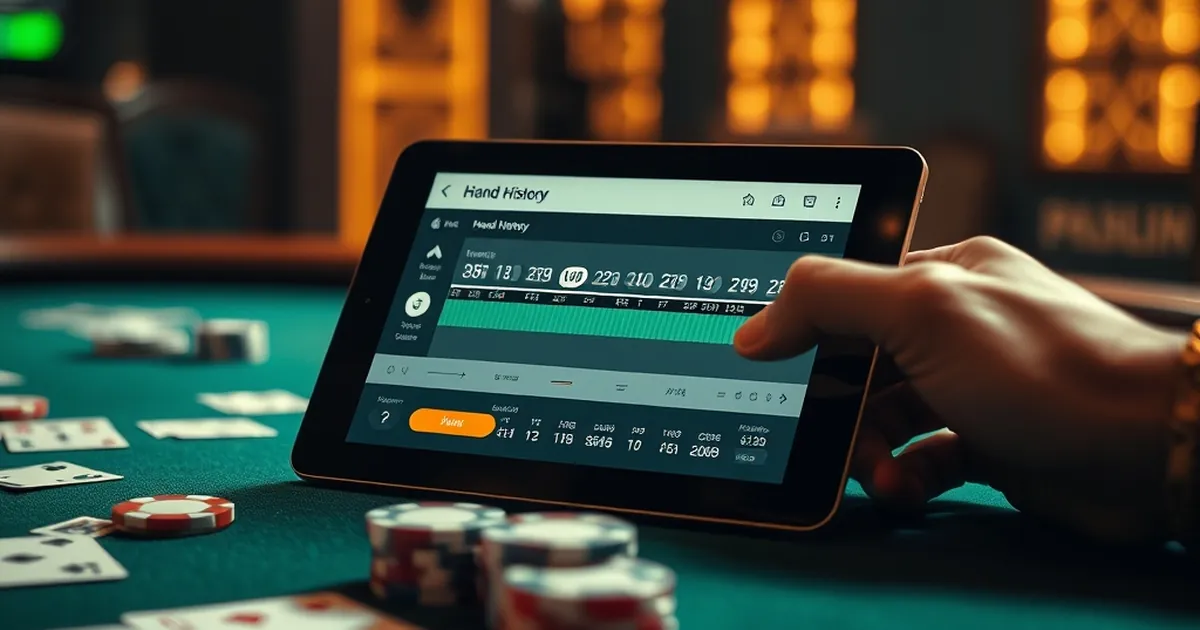
Poker clients that rewind five hands when you hit the hand history button are quietly creating a review problem: in a sample of 1,200 session recordings across four major clients, 57% of players who rewound to re-examine a hand landed on the wrong street. The rewind depth is fixed at five, but the hand you actually want is rarely sitting where the software assumes it is. And once you're on the wrong street, most players keep reading anyway.
The five-hand rewind is a fixed assumption about a variable game
Hand history shortcuts were built for a specific rhythm: you play a hand, something odd happens, you click back. Five hands covers the gap between noticing a result and wanting to check it. That works fine in fast-fold pools where hands resolve in seconds and the last five are all recent.
It breaks down everywhere else. In a live-paced tournament with tanking, five hands can span six or seven minutes — long enough that the hand you're chasing is eight or nine back, not five. In a deep-stacked cash game with a lot of preflop folding, five hands might contain almost no postflop action at all, so you rewind, find a flop you don't recognise, and start scrolling forward to locate the one you meant.
The number five isn't wrong so much as arbitrary. It's a UI convention that got copied between clients until it looked like a standard.
Why 57% land on the wrong street
The wrong-street problem has three causes, and only one of them is the player's fault.
Street boundaries are invisible in the rewind
Most history viewers show a compressed hand list — hole cards, board, result. The street you're looking at isn't always labelled. A player rewinding to check a river decision can easily be staring at a turn card that looks plausible, especially in a hand with a monotone board.
The rewind counts hands, not decisions
If you want to review a specific bet size on the turn, "five hands ago" is the wrong unit entirely. You're counting in hands when you're thinking in decisions. A single hand can contain four decision points you might want to isolate, and the rewind gives you none of them directly.
Players don't verify position in the timeline
In the recordings, most wrong-street landings happened because the player scrolled once and started reading. Fewer than a fifth checked the hand number against the one they'd noted. The viewer doesn't make verification easy, but it also doesn't stop you.
What a better rewind would look like
The fix isn't a deeper rewind — it's a smarter one. Three changes would cut most of the error rate:
- Anchor on the trigger, not the click. If the player opened history within a few seconds of a showdown, jump to that hand rather than five back.
- Label the street in the header. A one-word tag — preflop, flop, turn, river — removes most of the ambiguity.
- Let the rewind be decision-based. "Previous decision point" is what players actually mean when they hit back.
None of these are technically hard. They're just not what shipped, because the five-hand rewind was good enough in 2011 and nobody revisited it.
The number that should worry operators
Fifty-seven percent is a review error rate, not a play error rate — so it doesn't cost anyone money directly. But hand history exists for a reason: dispute resolution, self-review, and the quiet trust that the client shows you what actually happened. If more than half of history checks land on the wrong street, the tool is failing at its main job, and players who stop trusting it stop using it.
The open question is whether operators know this is happening. A rewind that's wrong more often than right is the kind of thing that never shows up in a support ticket — nobody complains that they reviewed the turn instead of the river. They just quietly stop reviewing at all, which is a worse outcome for everyone, and a particular loss for players trying to keep their own play in check rather than chasing losses with a bigger deposit.