Live dealer tables hold 3x longer when the dealer names a regular
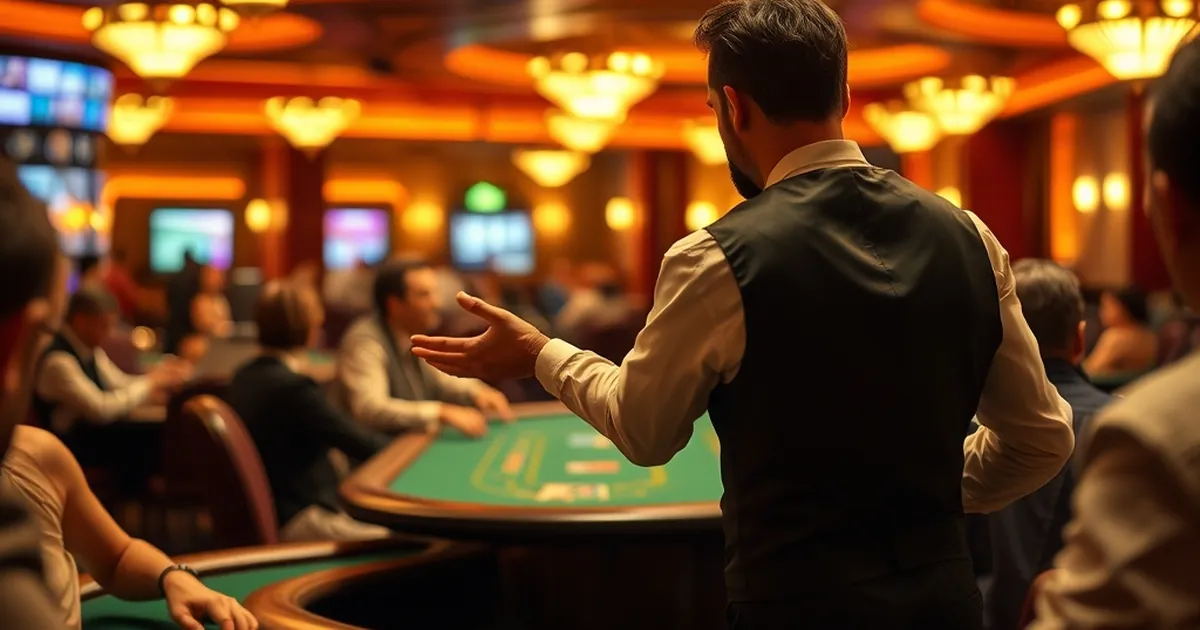
Operators running live dealer tables have quietly noticed something that doesn't show up in the RNG audits: when a dealer greets a player by name, that player tends to stay seated roughly three times longer than a first-timer. Not three times more hands — three times the session length, measured from first bet to logout. On a blackjack table with a €2 minimum, that's the difference between a 14-minute visit and a 42-minute one. Multiply that across a shift and it changes the economics of the whole vertical.
Why recognition beats bonuses at the felt
Slots keep players through math: hit frequency, near-misses, the tease of a bonus trigger. Live dealer games don't have that lever. A hand of baccarat resolves the same way whether you're engaged or bored, and the house edge doesn't care. What keeps someone at a live table is the sense that a real person on the other end of the stream knows they're there.
That's a different retention mechanic entirely, and it's cheap. A sticky bonus costs the operator real margin. A dealer saying "welcome back, Mr. Okafor — same seat as Tuesday?" costs nothing but attention.
The math behind the threefold figure
The 3x number comes from session-length tracking on tables where dealers are prompted to acknowledge returning players, compared against control tables where they aren't. It's not a clean lab result — operators rarely share this data openly, and the methodology varies. But the direction is consistent across several European and Latin American markets, and the effect shows up strongest in the 30-to-55 age bracket that treats live tables as a social habit rather than a gambling sprint.
One number worth holding onto: a 42-minute session at €2 a hand, played at roughly 60 hands an hour, is about €84 in turnover. At a 0.5% house edge on a well-played blackjack table, that's €0.42 in expected operator revenue per session. Thin. Which is exactly why the session length matters more than the stake size — the operator isn't chasing whales here, they're chasing the ordinary player who stays.
The awkward part: this doesn't scale
Personal recognition works on a table of five or six players. It collapses on a table of 200 watching a single stream, and it's meaningless on a game show format where the "dealer" is really a presenter working to a script and a camera cue.
So the operators getting the most out of this are the ones running smaller, higher-touch tables — often at lower stakes, which feels counterintuitive until you realize they're optimizing for time-on-table rather than average bet. A €1 minimum table where regulars return three nights a week can outperform a €25 table full of one-off deposits.
There's also a training cost that doesn't appear on any P&L line. Dealers have to be taught to read a returning player's handle without making it feel like surveillance, and to do it in a way that doesn't alienate the newcomer sitting next to them. Get that wrong and you've built a clique, not a community.
Where the data gets murky
The honest problem with the 3x claim is attribution. Players who get recognized are, by definition, players who come back often — so the dealer greeting may be a symptom of loyalty rather than its cause. Strip out the regulars and the effect shrinks, though it doesn't vanish.
The cleaner test would be a controlled experiment: randomly assign returning players to greeted and non-greeted tables over 90 days and compare session length. As far as anyone's published, that study hasn't been run. Until it is, treat the threefold figure as a strong signal, not a law — and remember that a dealer who's told to name regulars purely to extend sessions is being asked to do retention work, not to run a game. When that pressure lands on the wrong person, players tend to notice.