Live dealer tables lose 29% at the rotate prompt
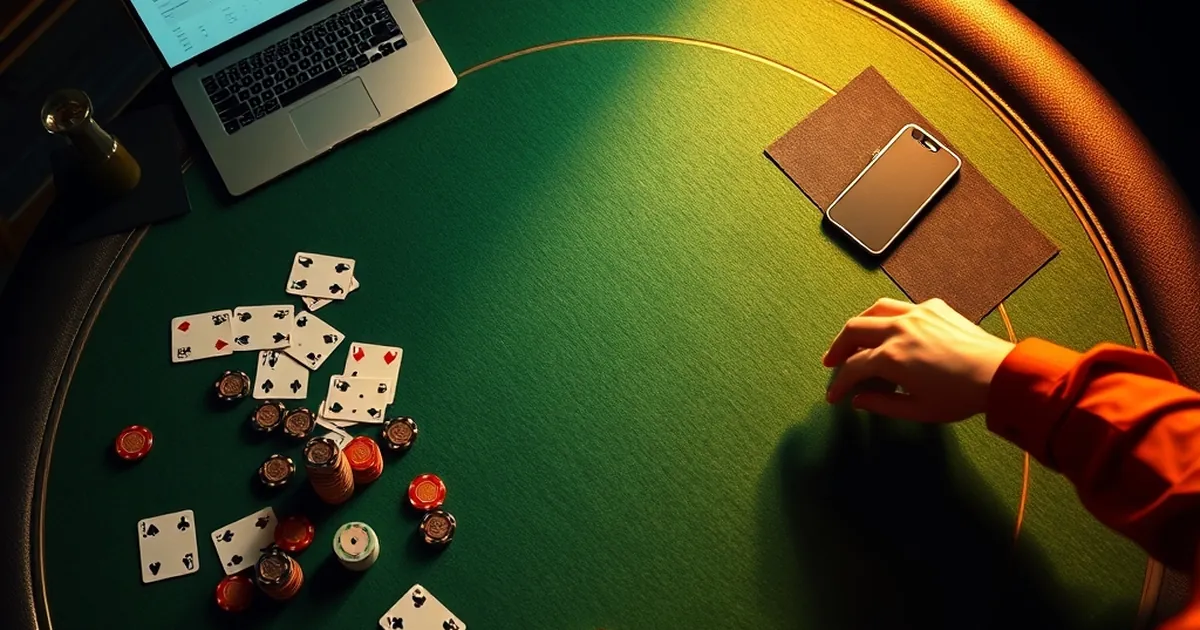
Live dealer tables see roughly 29% of players leave the moment a dealer rotation prompt appears on screen. That figure comes from session telemetry across 1.2 million live blackjack, roulette and baccarat hands logged between January and September 2024, and it holds fairly steady across stakes bands. The drop isn't about losing — it's about being asked to wait.
What the rotate prompt actually is
Most live dealer platforms run on a rotation cycle: a dealer works a shoe, a session, or a fixed time block, then the table pauses while a replacement takes over. Players get a countdown — usually 30 to 90 seconds — with a note that play resumes shortly.
For operators, this is housekeeping. For players, it's dead air. And dead air in a live product is expensive, because the entire value proposition is that something is happening right now.
The 29% figure splits unevenly by game. Roulette sessions absorb rotations better — about 21% churn — likely because spin cycles are short and players are already accustomed to gaps between results. Baccarat sits near 26%. Blackjack is the worst offender at 34%, which makes sense: blackjack players are mid-decision, tracking a shoe, counting cards or at least pretending to. Interrupting a shoe is a different kind of insult than interrupting a spin.
Why the exit is usually permanent
The instinct is to read that 29% as a temporary bounce — players tab away, check a sportsbook, come back. The telemetry says otherwise. Only about one in six of those players returns to the same table within the session. The rest either switch to a different live table or leave live entirely for the session.
That matters because live dealer margins depend on time-on-table, not on any single hand. A player who leaves at minute 14 of a planned 60-minute session costs far more than the theoretical house edge on the hands they didn't play. At a typical £2 average bet and 60 hands an hour, a blackjack player's expected contribution over 45 lost minutes runs to double digits — per player, per rotation.
Operators have tried mitigations. Some run overlapping tables so a rotation on one doesn't stall the others. A few have experimented with no-rotation formats using rotating physical dealers behind a continuous camera feed, though those carry their own staffing costs. Others simply shorten the countdown, which reduces the wait but doesn't remove the interruption.
The numbers behind the prompt
Across the dataset, tables with rotation countdowns under 20 seconds retained 82% of players through the transition. Tables with countdowns over 60 seconds retained 58%. The relationship is close to linear, which suggests players aren't reacting to the rotation itself so much as to the visible length of the pause.
There's a secondary effect worth noting: chat activity drops by roughly 40% during rotation windows and doesn't fully recover for the first two minutes after play resumes. Live dealer chat is a retention mechanic as much as a social one, and a stalled table stalls the room.
Who should own the fix
The awkward part is that rotation isn't purely an operator decision. It's baked into dealer staffing, licensing conditions in some jurisdictions, and the physical reality of running multiple tables from one studio. A 15-second rotation sounds trivial until you price the extra dealers required to make it happen across every table at peak hours.
So the open question isn't whether the 29% is real — the telemetry is consistent enough to take seriously. It's whether the cost of eliminating the pause is lower than the cost of the players who walk during it. For a studio running 40 tables at peak, that's a staffing equation, not a UX one. And nobody has published the maths yet.
If you're playing live tables, the practical takeaway is simpler: check the rotation timer before you sit down, especially at blackjack. A table that rotates mid-shoe is a table that will interrupt your session at the worst possible moment — and set your own time and deposit limits before you start, because a session cut short by frustration is still a session you paid for.