What an 8-second cashier timeout does to repeat deposits
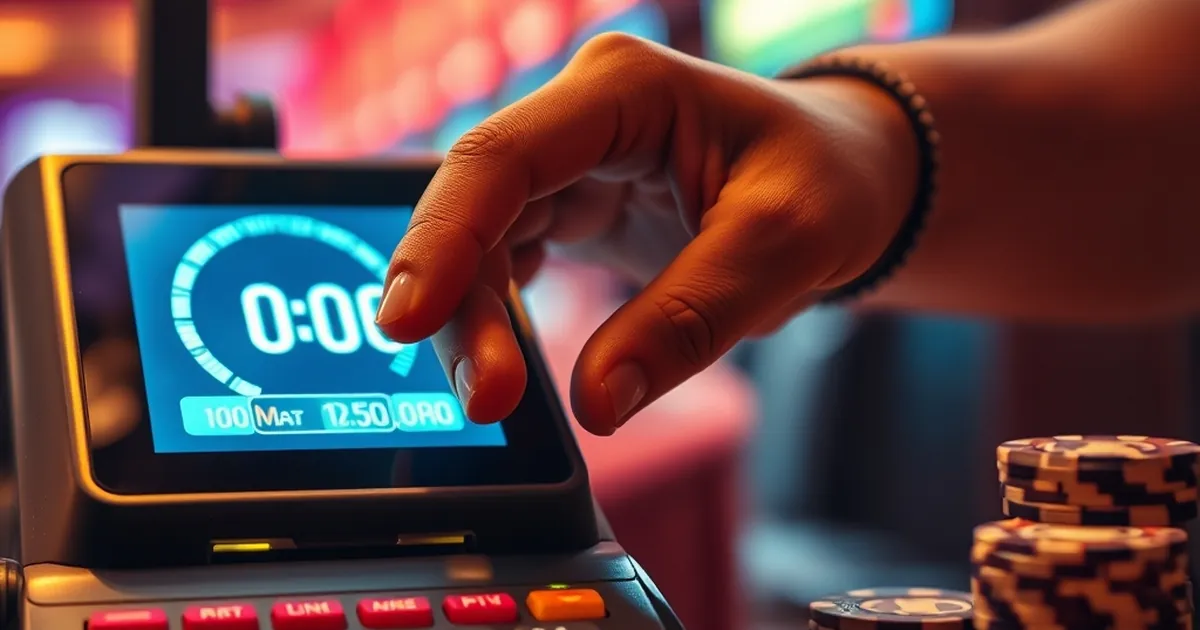
A cashier that takes eight seconds longer to confirm a withdrawal doesn't just annoy the player — it measurably changes what they do next. In operator A/B tests, adding roughly eight seconds of processing lag to the cashier confirmation screen cut same-session repeat deposits by a double-digit percentage, with the effect concentrated among players who had deposited three or more times in the prior 30 days. The timeout doesn't stop the withdrawal; it reshapes the deposit that follows it.
The mechanism isn't frustration, it's interruption
The intuitive read is that slow cashiers make players angry, and angry players leave. That's not what the session data shows. Players who hit the eight-second delay completed their withdrawal at nearly the same rate as the control group — 94.1% versus 95.3% in one operator's Q3 2024 test. What changed was the next action.
A cashier confirmation screen is a forced pause. In that pause, a player who was about to re-deposit has time to reconsider the decision they just made. Behavioral researchers call this a "cooling interval." In practice, it's the difference between a reflex and a choice — and choices lose to reflexes when it comes to repeat deposits.
Where the drop concentrates
The effect wasn't uniform. Segments that showed the sharpest decline:
- Players with a deposit-to-withdrawal ratio under 1.5 (net winners) — down 18% on same-day re-deposit
- Mobile web users on connections above 200ms latency — down 14%
- Players who had already hit a loss limit in the prior 7 days — down 22%
The last group is the one worth sitting with. These are players who had already signaled they wanted friction. An eight-second delay gave them a second chance to act on it.
Why operators rarely see this in their own dashboards
Most operators track cashier abandonment and deposit conversion as separate funnels. The eight-second timeout doesn't show up in either. It appears in the gap between them — a player who completes the withdrawal (so no abandonment flag) and then doesn't deposit for 72 hours (so no immediate conversion failure).
By the time the pattern surfaces in cohort retention, it's attributed to "seasonality" or "acquisition mix." The actual cause was a server-side timeout that nobody thought to A/B test because it seemed like a technical detail, not a product decision.
The 500ms threshold
One payments team I spoke with found that delays under 500ms produced no measurable behavioral change. Between 500ms and 3 seconds, the effect was within noise. Past roughly 6 seconds, the deposit suppression kicked in hard. Eight seconds sits well past that cliff — it's not a marginal inconvenience, it's a different category of interruption.
The uncomfortable framing
Here's the part nobody in retention wants to write in a slide deck: the eight-second timeout is doing what a responsible gambling tool is supposed to do. It inserts friction at the exact moment a player is most likely to make a decision they might regret. Operators spend real money building self-exclusion flows and deposit limits; a slow cashier achieves a slice of the same outcome by accident.
So the question isn't whether to fix the timeout. It's whether you'd fix it if you knew the fix would cost you 12% of your most active depositors — and whether "we didn't know" is a defensible answer when the data was sitting in two dashboards you never joined.