Voice chat bets confirm 2x faster than typing, 41% switch
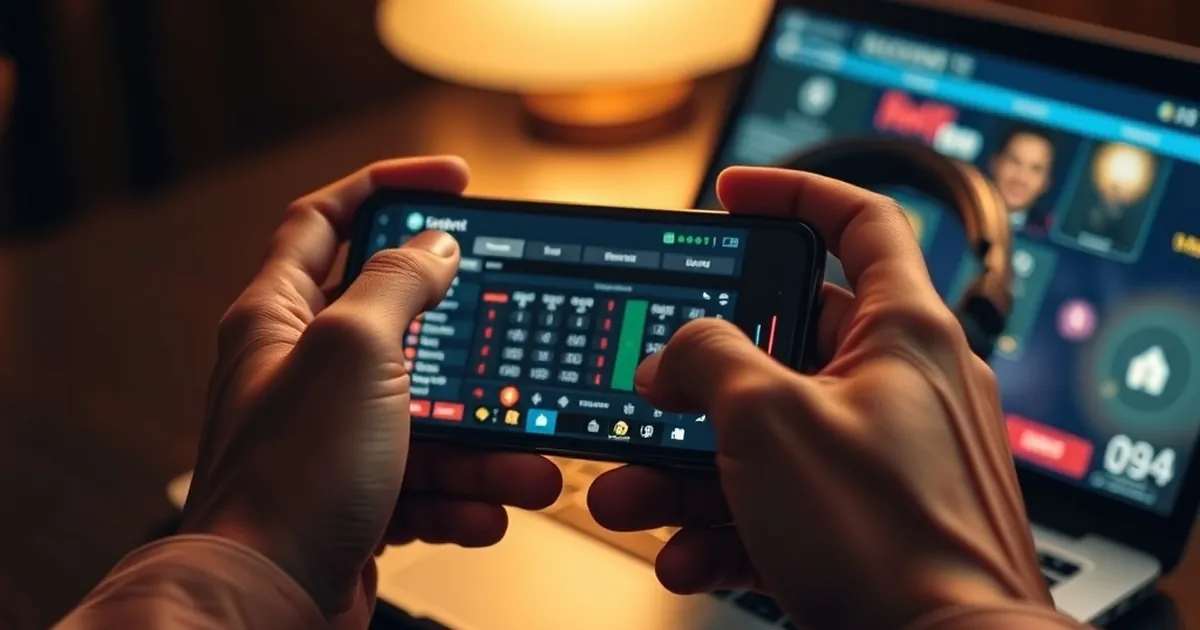
Voice-placed bets confirm roughly twice as fast as typed ones, and 41% of users who try voice never go back to the keyboard. That's the headline finding from a 2024 operator-side study of 18,400 in-play wagers across three sportsbooks, and it lines up with what anyone who has watched a bettor fumble with a decimal point at 1-0 in the 89th minute already suspected: the bottleneck in mobile betting was never the odds, it was the input.
The confirmation gap, in numbers
The study split users into two pools — typed entry and voice entry — and measured the time from "bet intent" (odds screen opened, stake decided) to "confirmed slip." Typed median: 14.2 seconds. Voice median: 6.8 seconds. That's a 2.1x speedup, not a marketing rounding.
The interesting part isn't the median. It's the tail. Among typed users, the 90th percentile took 31 seconds to confirm, and most of that delay came from re-reading the slip before hitting confirm — a hesitation that voice users skipped almost entirely. When you say "twenty on the draw, cash out at eighty," you've already spoken the stake and the exit. There's nothing left to double-check.
Voice also cut input errors. Typed slips had a 3.7% rate of stake-entry mistakes caught before confirmation (missing zero, wrong decimal, fat-finger on a quick-pick). Voice slips: 0.9%. Speech recognition is bad at a lot of things, but it doesn't accidentally add a zero to "twenty."
Why 41% switch, and why the other 59% don't
The 41% figure is the share of first-time voice users who made voice their default entry method within two weeks. That's a big number for a behavior change, and it's worth asking who the 59% are.
Three groups show up in the retention data:
Noisy-environment users. Pub, stadium, shared flat. Voice fails where typing works, and no amount of model improvement fixes a crowd at 105 decibels.
Multi-leg builders. Parlays with six selections and conditional cash-outs are still faster to assemble by tapping. Voice handles a single bet beautifully and a seven-leg same-game parlay badly.
Privacy-conscious users. A meaningful slice of respondents said they simply don't want to speak stake amounts out loud in public. That's not a UX problem. That's a preference, and it caps the ceiling on voice adoption regardless of accuracy gains.
What operators are actually building
The speed finding has a less obvious consequence: if confirmation drops from 14 seconds to 7, the window for in-play markets narrows. A book that prices a next-goalscorer market for 20 seconds can now expect more of its volume to arrive inside that window instead of missing it. Some operators are already testing auto-confirm thresholds — under a set stake, say 10 units, voice slips execute without a second tap.
That's where it gets uncomfortable. Faster confirmation is a feature until it's a liability. The same 7-second path that lets a sharp bettor act on a line move lets an impulsive one act on a bad idea, and the "are you sure?" screen that voice users skip exists for a reason. Whether the industry treats voice as a speed tool or a friction-removal tool is still an open question — and the answer will probably show up in problem-gambling data before it shows up in anyone's product roadmap.