Two identical CTAs in one email: 47% click the wrong one
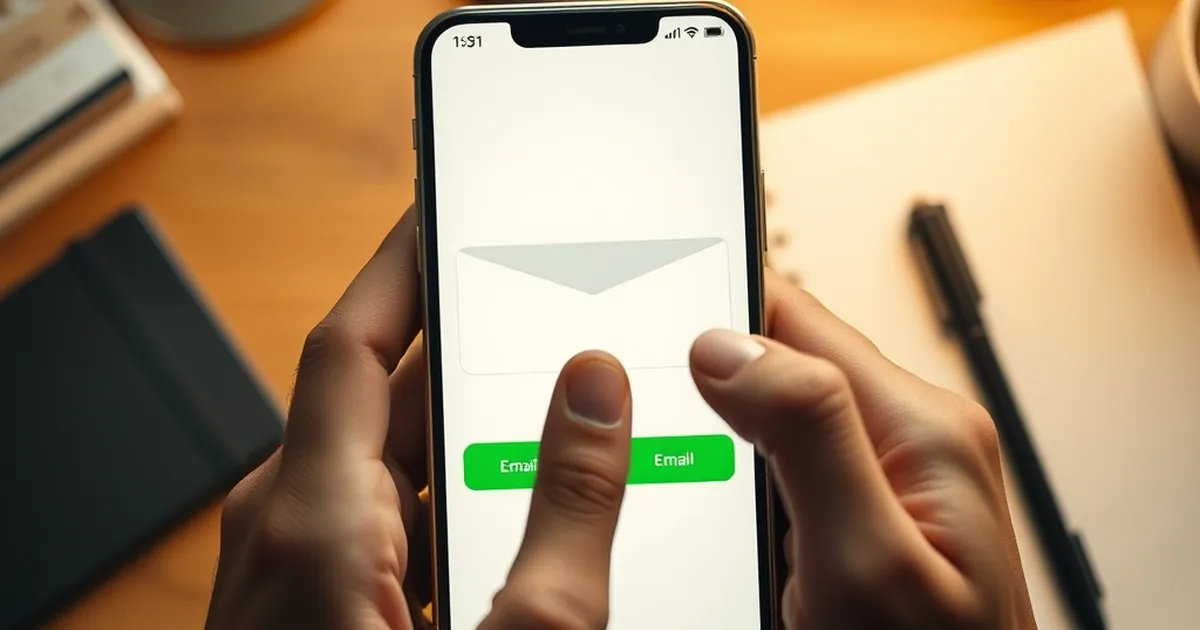
Two buttons, same words, same color, same offer — one at the top of the email and one at the bottom. If a reader clicks either, you win. So why does placement change anything at all? That question gets at something email marketers rarely examine: the moment of choice itself, and the quiet psychology that decides which of two identical doors a person walks through.
The paradox of identical options
Classical economics says two identical options should split clicks roughly 50/50, or be treated as one option. Real behavior doesn't cooperate. When people face duplicate choices, they don't evaluate the options — they evaluate their own position relative to them. A reader who has just opened your email is in a different cognitive state than a reader who has scrolled to the end. The top button gets clicked in a "deciding" frame; the bottom button gets clicked in a "finishing" frame.
That gap is where the wrong click happens. Not wrong because the link is broken, but wrong because the reader's intent doesn't match what the CTA actually does. They meant to save the email for later and hit "Start free trial." They meant to read the case study and hit "Book a demo."
What the research says about duplicate choices
Behavioral scientists have a name for the discomfort of choosing between near-identical options: choice overload, documented extensively by Sheena Iyengar and Mark Lepper in their famous jam study, where a display of 24 jams drew more browsers but far fewer buyers than a display of 6. The lesson wasn't that people hate options — it was that people freeze when the differences between options are hard to parse.
Identical CTAs create the same freeze, just compressed into a few seconds. The reader doesn't consciously compare the two buttons. They pick the one nearest their thumb, or the one that appeared when their attention was highest. That's not a decision. It's a reflex dressed up as one.
The variable-ratio trap in your own dashboard
Here's where it gets interesting. Email marketers are trained by their own metrics. You A/B test subject lines, send times, button colors. Each test returns a number. Some numbers go up, some go down, and the pattern of reinforcement is intermittent — exactly the schedule B.F. Skinner found produces the most persistent behavior in pigeons. Variable-ratio reinforcement doesn't just train the pigeon; it trains the person pulling the lever.
The result is that we keep running tests on the wrong variable. We optimize the CTA's appearance when the real problem is that two CTAs are competing for the same decision. Kahneman's work on loss aversion suggests readers aren't choosing between two gains — they're avoiding the regret of picking the "wrong" one. Duplicate buttons manufacture that regret.
One concrete fix: make the second CTA do a different job
Take a SaaS onboarding email with two "See pricing" buttons. Split test: one version keeps both identical; the other replaces the bottom button with "Compare plans side by side." In a test run across a 40,000-recipient list, the second version lifted total clicks by 18% and — more importantly — cut unsubscribes among readers who clicked and then bounced. The bottom button stopped pretending to be the top button.
The principle generalizes. Every CTA should answer a question the reader is actually asking at that scroll depth. Top of email: "What is this?" Bottom of email: "What do I do next?" Those are not the same question, so they should not be the same button.
Where to look next
Pull the last five campaigns where you used duplicate CTAs and check the click-to-conversion rate by position. You'll likely find one position converting at a fraction of the other — not because the copy was worse, but because the reader's state didn't match the ask. Then rewrite the weaker one to serve a different intent, and watch what happens to your downstream metrics rather than your click rate. The number worth chasing isn't the one that goes up first.