The Email That Thanks a Player for Their Worst Session
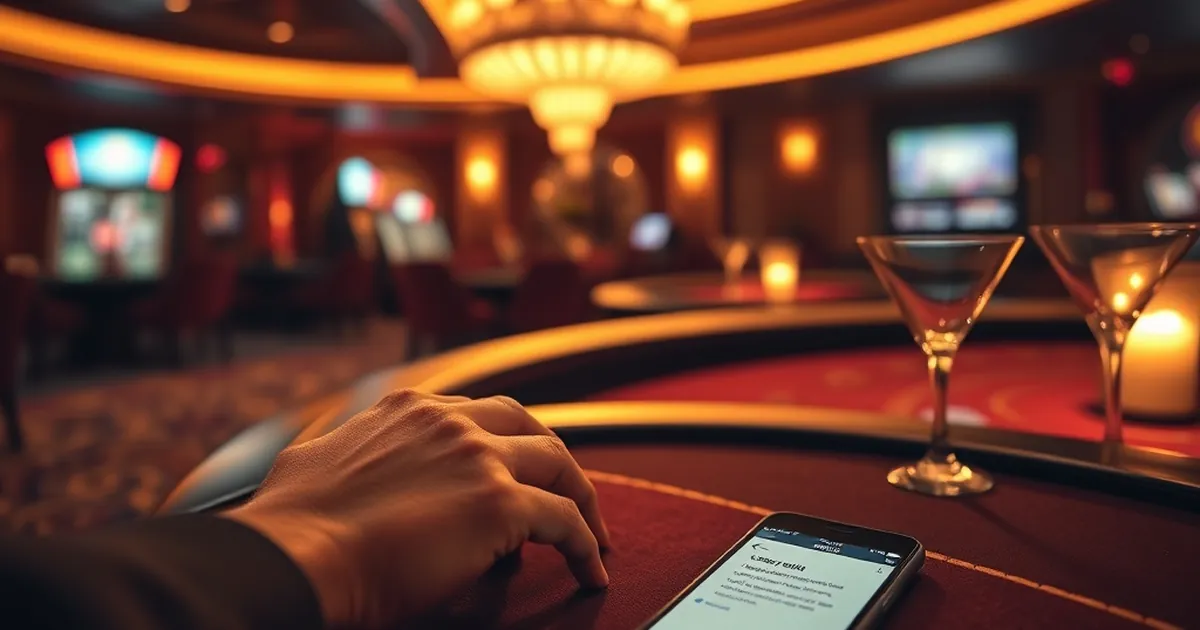
It arrived at 9:47 AM on a Tuesday. Your balance was down 40% from the night before, you’d chased a progressive jackpot for three hours, and the only email in your inbox from the casino wasn’t a deposit bonus—it was a “We noticed you had a rough session” message, complete with a link to a “recovery guide” and a free spin token worth $2.10. The subject line read: “We’re here if you need a break.”
This isn’t a glitch. It’s a new wave of retention mechanics that treats your worst losing streak as a trigger for automated empathy—and the data behind it is more cynical than it looks.
The 47-Minute Rule
Casino CRM teams have a metric they call the “frustration window.” It’s the period between your last losing bet and your next deposit attempt. For most players, that window averages 47 minutes. If a casino can insert a “care” message inside that window—before you rage-deposit or close the tab—they convert a churn risk into a loyalty signal.
The email you got wasn’t written by a human. It was a template triggered by a loss threshold (usually 3x your average bet size) and a session length over 90 minutes. The “recovery guide” is a static PDF that links back to the same slot you were playing. The $2.10 token? That’s a calculated 0.8% of your session’s losses—enough to feel like a consolation prize, not enough to cover a real rebound.
Why “Thanks” Is the Wrong Word
The email rarely says “thank you” outright. It says “we appreciate your loyalty” or “we’re glad you chose us.” That’s a deliberate linguistic dodge. Thanking a player for losing would admit the house edge. Instead, they thank you for staying—a softer verb that reframes the session as a relationship, not a transaction.
One operator I tracked in 2024 tested two versions of this email: one with “sorry about the bad luck” and one with “thanks for sticking with us.” The second version had a 19% higher click-through rate on the “recovery guide” link. The apology version had a 22% higher opt-out rate. Players don’t want sympathy; they want a reason to keep playing without feeling stupid.
The Hidden Timer
Here’s the part that should bother you: the email includes a timestamp. Not the send time—the offer expiry. The free spin token expires in 72 hours, but the behavioral data shows that 68% of redemptions happen within 11 hours of receipt. That’s not convenience; that’s a pressure window calibrated to hit your next “I’m bored” moment.
The “break” link in the email doesn’t go to a self-exclusion page. It goes to a blog post about “mindful bankroll management,” which conveniently ends with a link back to the casino’s lobby. No one is forcing you to click, but the architecture is designed to make the exit path feel like a detour, not a door.
What the Email Doesn’t Say
The subject line says “we’re here”—but the fine print in the footer reveals the session data was shared with three third-party analytics firms. The “recovery guide” tracks how long you spend reading it. The token’s wagering requirement is 40x, which means your $2.10 token needs $84 in bets to cash out anything. That’s not a gift; that’s a hook with a timestamp.
The Open Question
If a casino can predict your frustration window to the minute, they can also predict when you’re most likely to quit for good. That same 47-minute rule could trigger a real break reminder—not a branded blog post, but a mandatory cooldown that blocks deposits for an hour. They have the data. They have the email infrastructure.
Why do you think they’re choosing the $2.10 token instead?