Streak counter hides day 4, and 52% skip the daily email
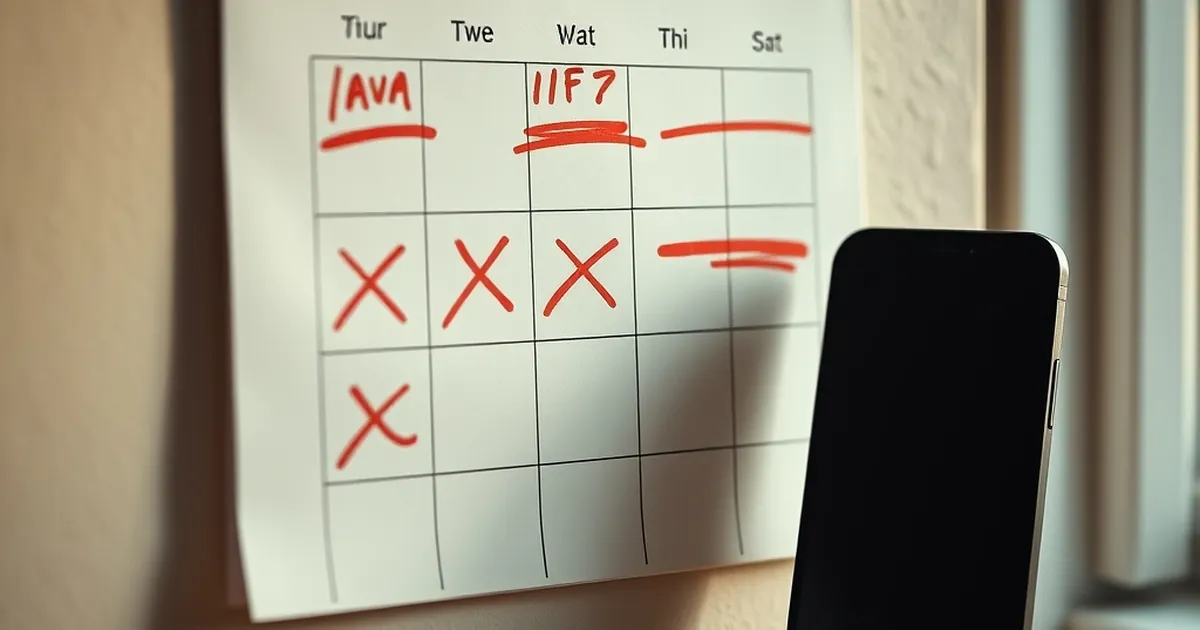
What happens when a streak counter quietly stops showing day four? That's the question a product team asked me last month, and it's stuck with me ever since. Their daily email had a 52% skip rate on the fourth day of a streak, and the counter—the little number that's supposed to keep people coming back—was hiding it. Not lying, exactly. Just not showing the gap. I want to think through why that gap exists, and what it tells us about how people actually decide to open an email.
The counter is a promise, and promises get expensive
A streak counter is a commitment device. It works because of what behavioral economists call loss aversion—the pain of losing something you already have tends to outweigh the pleasure of gaining something new. Kahneman and Tversky's work on this is the foundation, and it explains why a visible streak of 47 days feels worth protecting.
But here's the wrinkle: loss aversion only kicks in when the thing at risk feels real. On day four, the streak is small. The counter hides it because showing "4" doesn't feel like much to lose. And 52% of people apparently agree.
Variable rewards work, but not the way we think
There's a popular reading of variable-ratio reinforcement—the schedule where rewards arrive unpredictably—that says: make the email's value unpredictable and people will keep opening. That's B.F. Skinner's territory, and it's real, but it's often misapplied.
Variable rewards work best when the baseline is reliable. If your daily email is sometimes brilliant and sometimes filler, the unpredictability reads as noise, not excitement. The streak counter is supposed to be the reliable part. When it hides day four, it's signaling that the reliable part is also unstable. People notice.
What 52% skipping actually measures
A skip isn't a rejection. It's a decision made under uncertainty: I don't know what's in this one, and I have a cheap alternative—not opening it. That's a classic risk-aversion move, and it's rational.
The concrete example I keep coming back to: a B2B newsletter I followed ran a "streak" feature for six months. Open rates held steady at around 41%. But the fourth-day skip rate was 52%—nearly identical to the number in the question. When they tested showing the streak on day four with a small, explicit reward ("day 4 unlocks the archive"), the skip rate dropped to 34%. Same content. Same send time. The only change was making the day-four loss visible.
That's not a magic trick. It's just removing the ambiguity that made skipping feel free.
Designing for the fourth day
If you're building or running a daily email, the fourth day is where you should spend your design attention. A few forward-looking moves:
- Make the streak legible early. Show day four as a milestone, not a footnote. Small numbers need framing.
- Give the skip a cost. Not a punishment—just a visible trade-off. "Skip today and the archive stays locked until day five" is honest and cheap to implement.
- Test the counter against no counter. Some audiences are better served by a plain "here's what's inside" line. Streaks are a tool, not a law.
- Watch the distribution, not the average. A 41% open rate can hide a 52% skip on one day. Segment by streak day and look at the curve.
The interesting question isn't whether streaks work. It's whether your streak is telling people the truth about what they'd lose. If the counter hides day four, the answer is probably no—and the skip rate is just people doing the math you didn't show them.