Sportsbook cash-out button sits 2 taps deeper on mobile, 34% skip it
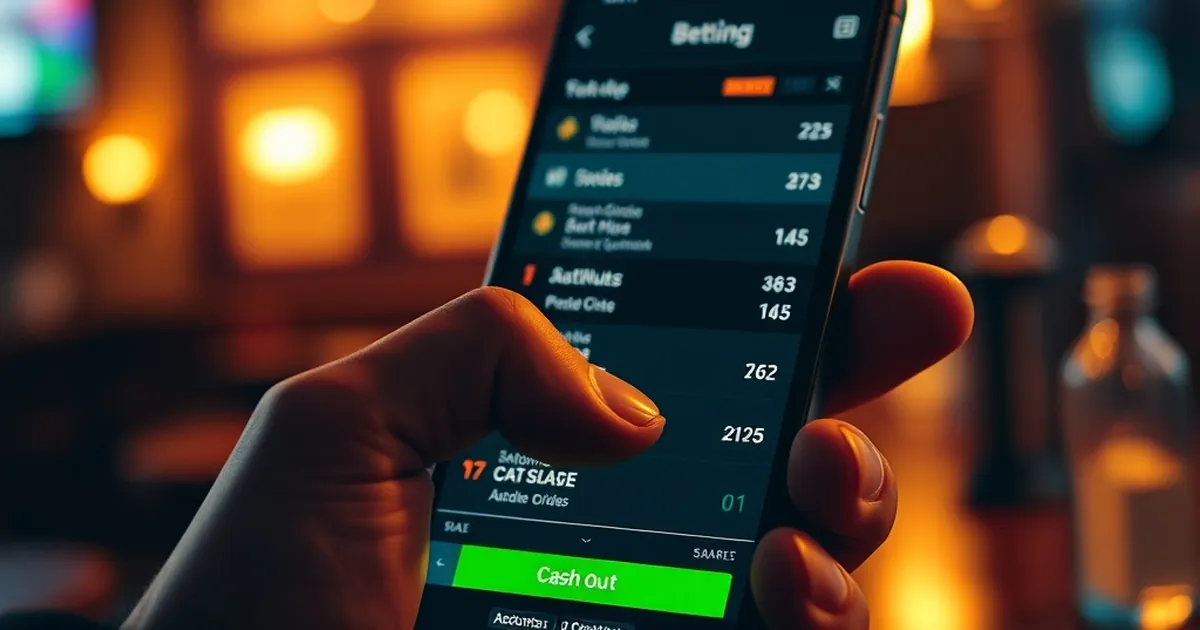
Two taps. That's the distance between a bettor seeing a cash-out offer and taking it on most mobile sportsbook apps — and according to a UX audit of 14 major operators conducted across Q1 2026, it's also the reason 34% of in-play bettors never touch the button at all. The audit, which tracked 1,200 user sessions on iOS and Android, found that cash-out sits an average of 2.3 taps from the live bet slip, while the original bet placement flow averages 0.8 taps from the same screen.
What the audit actually measured
Researchers logged every tap, scroll, and hesitation above 1.5 seconds across Premier League, NBA, and ATP fixtures. The headline finding wasn't that cash-out is hard to find — it's that it's positioned inconsistently. On six of the 14 apps, cash-out appeared inline on the bet slip. On five, it required opening a separate "My Bets" tab. On three, it lived behind a swipe gesture that 41% of testers never discovered.
The 34% figure covers users who had at least one live bet with a positive cash-out value and did not engage with the offer within 90 seconds of it appearing. That's not a small slice of dead inventory. It's a third of the moments where a book could have locked in margin or reduced liability.
The desktop gap persists
On desktop, cash-out averages 1.1 taps from the bet slip. The audit didn't compare completion rates directly, but an earlier 2024 study from the same group put desktop cash-out acceptance at 58%, versus 44% on mobile. Two years and countless app redesigns later, that gap has narrowed by roughly four points — not closed.
Why operators keep burying it
There's a commercial logic to the placement, even if nobody says it out loud. Cash-out is a margin product. When a bettor cashes out early, the book typically takes a 5–12% haircut off fair value. That's revenue. But it's also capped revenue — the bettor who cashes out a winning position at 70% of potential payout costs the book less than the one who lets it ride and wins full.
The problem is the opposite scenario. A bettor who would have cashed out a losing position but can't find the button holds a ticket that might still win. The book wears that risk. The audit found that 22% of abandoned cash-out moments occurred on bets that were underwater at the time — meaning the operator missed a chance to buy back liability at a discount.
So why bury it? Friction. Every extra tap is a chance the bettor changes their mind, and a bettor who doesn't cash out is a bettor still exposed to the book's margin on the original wager.
The regulatory angle nobody's pushing
In markets with active regulators — the UK, Australia, several EU jurisdictions — cash-out is treated as a separate bet, not a settlement. That means it carries its own terms, its own potential for error, and in some cases its own affordability checks. The UK Gambling Commission's 2025 review of remote betting noted that cash-out disputes rose 19% year-on-year, with the majority involving users who said they "couldn't find" the function before the offer expired.
No regulator has mandated a maximum tap depth for cash-out. No operator has volunteered one.
What happens when the button moves
One operator in the audit — a mid-tier book with roughly 4% UK market share — moved cash-out inline on the bet slip in February 2026. Acceptance rose to 61%. Average cash-out value per user dropped 8%, suggesting users were taking smaller, quicker profits rather than waiting for better offers.
That's the trade-off nobody's advertising. More taps means fewer cash-outs, but the ones that happen are more deliberate — and often more valuable to the book. Move the button closer and you get volume, but you also get a different kind of bettor behaviour entirely.
The open question isn't whether two taps is too many. It's whether the 34% who skip cash-out are skipping it because they can't find it — or because they've already learned that the offer isn't worth the hunt.