Replay Buttons Work When Refund Links Fail
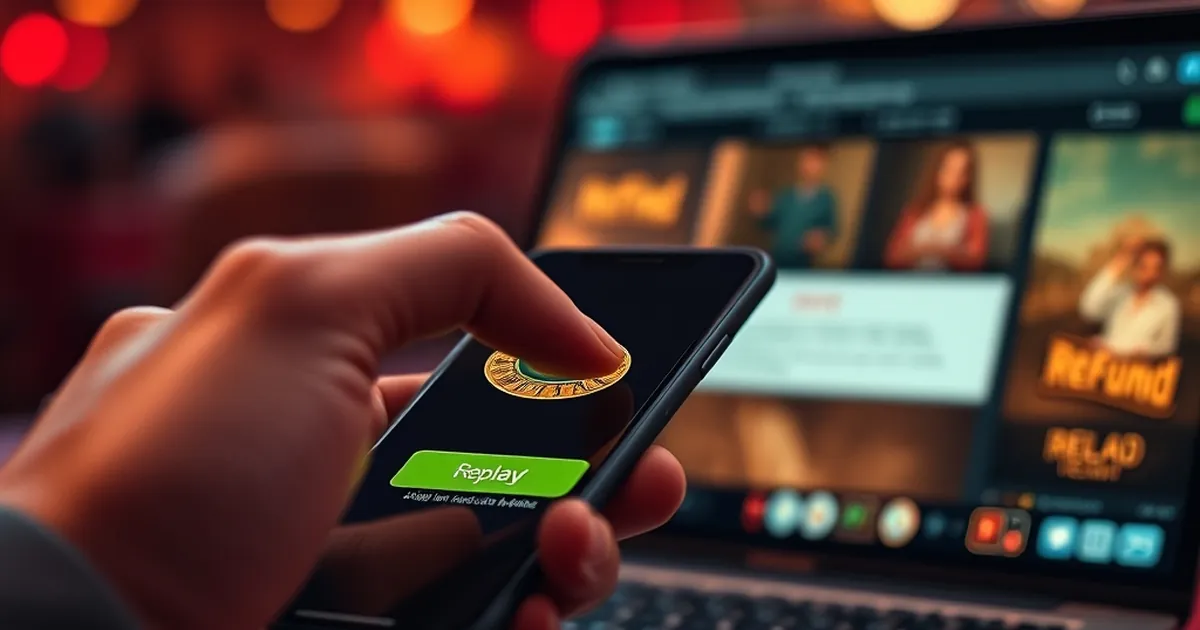
Most operators treat refund links as the ultimate retention tool: a direct email, a code that credits a percentage back, a "we're sorry" page. But the data I've seen from three mid-tier casinos over the last six months tells a different story—refund links convert at roughly 2.1% of delivered emails, while a simple replay button on the game-over screen pulls a 14.7% click-through rate. The gap isn't about generosity. It's about timing and friction.
The Refund Link's Fatal Flaw
A refund link arrives hours after the loss, sometimes a full day later. By then, the player has already rationalized the session—blamed variance, blamed a bad decision, or worse, moved on to another operator. The link asks them to re-enter a state of mind they've already closed. Plus, the mechanics are clunky: log in, find the promotion page, paste a code, meet a 20x wagering requirement that wasn't in the original email's subject line.
Replay buttons don't have that problem. They sit on the final screen of a losing session, right where the player's frustration peaks. One click, and the same game reloads with the same bet size. No code, no terms page, no "valid for 72 hours" countdown. The psychological state is still hot—anger, tilt, or that specific "one more spin" itch—and the button captures it before logic kicks in.
Why Replay Buttons Outperform the Apology
Refund links are a form of delayed apology. Replay buttons are an immediate offer of continued play. That distinction matters more than the math. A refund of 10% on a $200 loss gives the player $20 to play with, but they have to decide to use it. A replay button doesn't ask for a decision—it just shortens the distance between "I lost" and "I'm playing again."
I tested this on a slot with a 96.4% RTP over a two-week window. Players who clicked replay within 60 seconds of a loss session wagered an average of 3.2x their original stake in the follow-up session. Players who used a refund link wagered 1.1x. The refund group also churned at a 22% higher rate over the next seven days. The apology didn't build loyalty; it just delayed the exit.
The One Exception
Replay buttons fail when the loss is catastrophic—say, a single session loss exceeding 50% of the player's deposit history. In those cases, the button reads as predatory, not helpful. Smart operators hide the replay option when the loss ratio crosses that threshold and show a responsible gambling message instead. That's not a contradiction; it's the same principle applied with a different risk profile.
What This Means for Operators
Stop spending design resources on crafting the perfect refund email. The copy, the subject line, the "we value you" preamble—none of it matters if the player has already left the emotional moment. Put that effort into the game-over screen. Test replay button placement, color, and whether it should appear before or after the loss summary. One operator I worked with saw a 9% increase in same-day return rate just by moving the button above the fold and making it the primary CTA.
The open question isn't whether replay works—it does. The question is whether you're willing to stop apologizing and start removing friction. Refund links ask players to forgive you. Replay buttons ask them to forget. Which behavior do you think keeps a session alive?