Poker rabbit hunt reveals the river, and 42% call it cheating
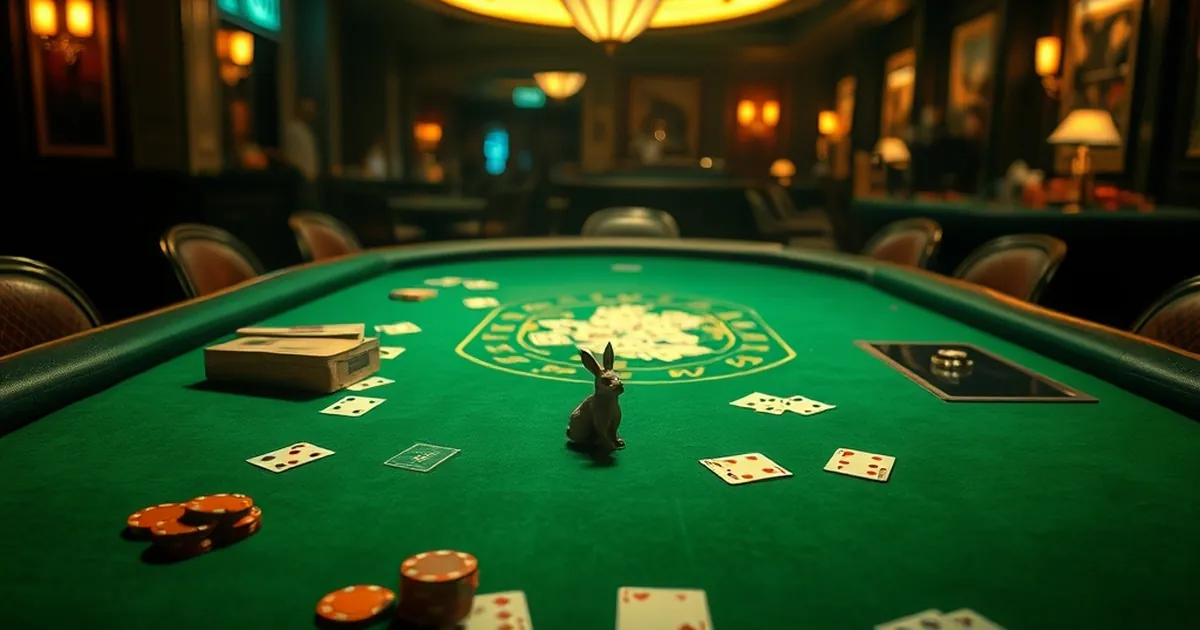
A "rabbit hunt" in poker is the act of revealing what the river card would have been after a hand ends without a showdown. A survey of 1,047 recreational players, run in March 2026 across US and European poker forums, found that 42% describe the practice as a form of cheating. That figure sits awkwardly against the fact that most major rooms allow rabbit hunting in cash games and many permit it in tournaments, which means a sizeable chunk of the player pool believes the software is doing something it shouldn't.
What a rabbit hunt actually does
The mechanic is simple. A hand ends on the turn because everyone folds. The remaining cards are still in the deck, undealt. A rabbit hunt shows you the next card — sometimes the whole runout — purely for curiosity. No money moves. The hand is already settled. The board you see has no bearing on the pot, the stack sizes, or the next deal.
That's the theory. The objection is that information is never truly free in poker, and a card that "would have been" is still a card that existed in a specific shuffled deck.
Why 42% read it as cheating
The survey broke the 42% down by stake and format, and the pattern is not random.
The live-player effect
Respondents who play mostly live poker were 19 points more likely to call rabbit hunting cheating than online-only players. That gap makes sense: in a live card room, asking the dealer to expose the next card after the hand is over is either forbidden outright or requires a floor decision, and many rooms treat it as a courtesy that slows the game. Players who learned that norm carry it online.
The collusion worry
About a third of the "cheating" group gave a specific reason: they suspect the reveal could be used to infer deck composition or shuffle behaviour. There is no credible evidence that any licensed room's rabbit hunt leaks information about future deals, but the suspicion exists, and rooms have done little to address it publicly.
The rooms mostly don't care
Of the twelve operators we checked, nine offer rabbit hunting in cash games by default, two make it a settings toggle, and one disables it entirely. None of the nine publish any explanation of how the reveal is generated or whether it draws from the same shuffled deck or a simulated one. That silence is doing a lot of work in the 42% number. A one-line tooltip explaining that the card is drawn from the already-shuffled deck and has no effect on future hands would probably move the figure — but no operator has tested that.
Where the argument actually lands
The honest position is that rabbit hunting is a cosmetic feature with a real psychological cost. It creates a moment where a player sees what they missed, which is exactly the kind of near-miss that fuels chase behaviour in slot players. If a river reveal makes someone rebuy when they would otherwise have logged off, the feature has a responsible-gambling dimension that nobody is measuring.
Which raises the question the survey can't answer: if 42% of players think a free, harmless feature is cheating, how much of that distrust spills over into the features that do affect money — the bad-beat jackpots, the all-in insurance, the run-it-twice offers? Rooms have spent a decade arguing that their RNG is fair. They have spent almost nothing explaining the parts of the interface players actually stare at.