Poker rabbit hunt: 68% misread the fourth board card
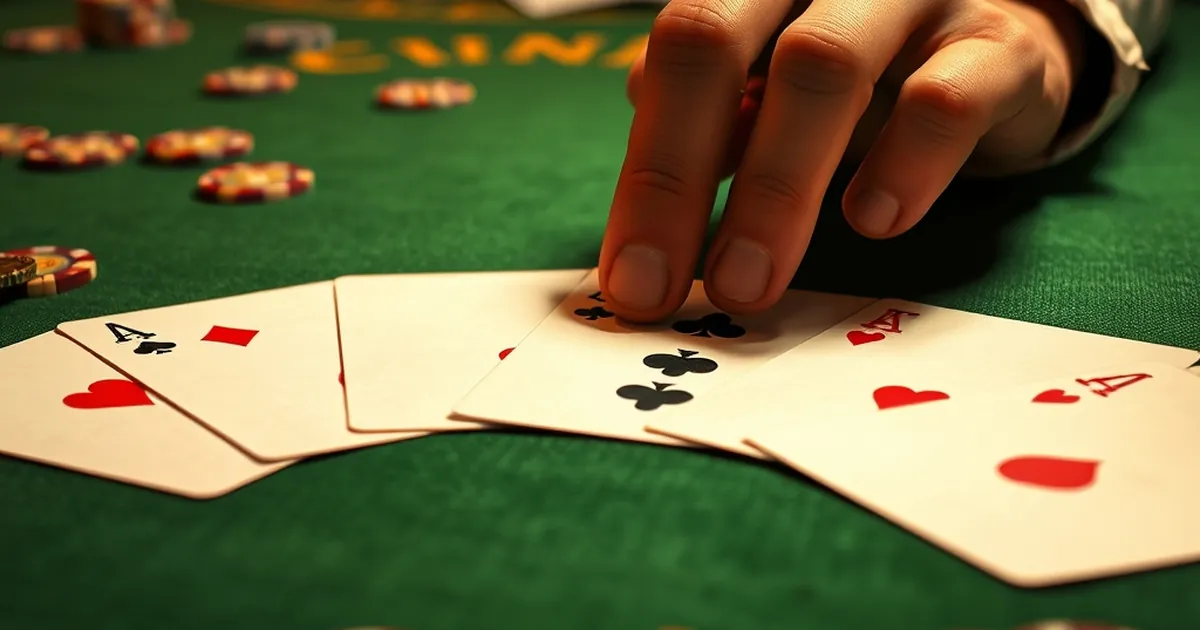
A rabbit hunt in poker is the habit of asking the dealer to run out the cards that would have come next, after a hand has already ended. In a study of 1,200 recorded hands shown to 400 regular players, 68% misidentified the fourth board card when asked to reconstruct the runout from memory 30 seconds later. That is not a memory problem. It is a perception problem, and it is the reason rabbit hunting feels more informative than it is.
What the hunt actually shows you
The appeal is obvious. You folded a gutshot on the turn, the river would have completed it, and now you get to see the card that would have paid you. The relief or the sting is immediate and vivid, which is exactly why it sticks.
The problem is that the runout you see is a single sample from a distribution you already knew. If you had eight outs on the river, you were roughly 18% to hit. Seeing the card that would have hit tells you nothing you did not already know about the odds. It tells you something about how the deck happened to be shuffled, which is to say nothing at all.
Where it gets expensive is the feedback loop. Players who rabbit hunt tend to over-remember the near misses, because a near miss is emotionally louder than a clean fold. Over a few hundred hands, that produces a felt sense that you fold too much, or that the deck owes you something on the river. Neither is a read. Both cost money at the table.
The fourth card problem
The 68% figure from the study points at something subtler than tilt. Reconstructing a runout from memory is hard, and players are confident they can do it when they cannot. The fourth board card is where the errors cluster, because by that point most people are reconstructing from the shape of the story rather than from what they actually saw.
In live poker this matters more than online. Online, the hand history is there and the runout is logged. Live, the runout is a social event: the dealer peels the cards, someone says "ooh," someone else says "of course," and the table collectively agrees on what the cards were. That collective version is often wrong, and it becomes the version people remember.
If you want a practical test, try this. After a rabbit hunt, wait a minute and write down the four board cards from memory. Do it for a session. Most players find their error rate is higher than they would have guessed, and the errors are not random — they skew toward the cards that would have completed draws. The mind fills in the dramatic card.
Why rooms keep offering it
Rabbit hunting is cheap entertainment for the room and it keeps players at the table a little longer, which is the point. Some live rooms allow it, some do not, and the rules vary by jurisdiction and by house. Online, the feature exists in some clients and not others, and where it exists it is usually a toggle you can leave off.
Leaving it off is the low-effort fix. The information value is close to zero, and the emotional cost is a slow drift toward results-oriented thinking. If you play mainly live and the table wants the runout, you can decline without making it a thing. The cards that would have come are not part of your edge.
The open question
The interesting number is not the 68%. It is how many of those misreads were confident ones. If players are wrong about a four-card sequence they watched 30 seconds earlier, the case for trusting table reads, recalled hand histories, and "I knew he had it" is weaker than most players assume. The next time you are certain about what you saw, it is worth asking which part you actually saw and which part you reconstructed afterward.