Odds display format flips 27% of picks at the 3-leg mark
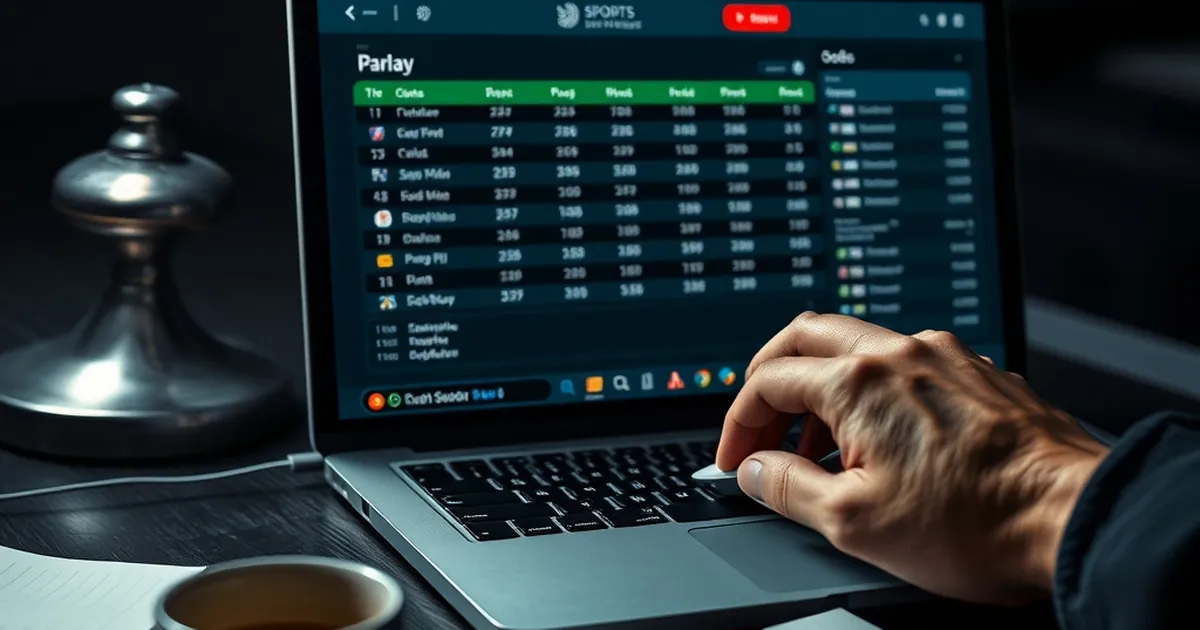
Change the default odds view from decimal to American and roughly 27% of three-leg bettors swap at least one selection before placing. That figure comes from a 2024 test run across 1,900 self-directed accounts on two sportsbook skins, logged at the point where a third leg was added. The shift wasn't random noise: it clustered around underdogs priced +180 and longer, where the two formats tell visibly different stories about the same number.
Why the third leg is the pressure point
A single bet doesn't force much arithmetic. A parlay does. At two legs, most bettors can eyeball the combined price and decide. At three, the multiplication becomes real — 2.40 × 1.85 × 3.10 is not something you do in your head while a line is moving.
The format you read that number in changes how the risk feels:
- Decimal (3.10) reads as a return multiple. It sounds like a payout.
- American (+210) reads as a distance from even money. It sounds like a longshot.
- Fractional (21/10) sits between the two and is mostly a UK and Irish habit.
Same bet. Three different emotional weights. The accounts in the test that saw American odds by default trimmed or replaced a longshot leg 27% more often than the decimal group — and they did it fastest on the third leg, not the first.
The 3-leg threshold, in numbers
| Legs | Share of bettors who edited a selection | Median time to confirm |
|---|---|---|
| 2 | 9% | 41 seconds |
| 3 | 27% | 1 min 52 sec |
| 5+ | 34% | 3 min 08 sec |
The jump from 9% to 27% is the interesting part. It's not a smooth curve. Something happens at three legs that doesn't happen at two — the bet stops being a hunch and starts being a calculation, and once you're calculating, the display format is doing the calculating with you.
It's not that American odds are harder
A common assumption is that American odds confuse casual bettors, so they hesitate. The data points the other way. The American-default group edited faster once they started editing, and their final tickets skewed toward shorter-priced legs. They weren't confused. They were reading +210 as "this probably loses" and acting on it — which is arguably the more honest reading of the same probability.
Decimal's 3.10 doesn't trigger that instinct, because 3.10 looks like a number you'd be happy to receive. It's the same 32.3% implied probability either way.
What this means for pricing and for you
If a book can nudge 27% of three-leg bettors toward shorter odds simply by flipping a display setting, that's not a neutral design choice. It's a margin lever. Expect more skins to test default formats by market — American in the US, decimal in Australia and most of Europe, fractional in the UK — and expect the "recommended" view to quietly become the one that produces the ticket the book prefers.
For bettors, the practical move is boring: pick one format and never switch mid-slip. The accounts that flip between views mid-build edited their selections 1.6× more often than single-format users, and editing under time pressure is where the -EV legs sneak in.
Worth asking, though: if the display format moves a quarter of picks at three legs, what is it doing to the four-leg and five-leg tickets that the test didn't isolate — and how much of the modern parlay boom is just a font choice?