Max bet button skips the confirm dialog, and 52% tap twice
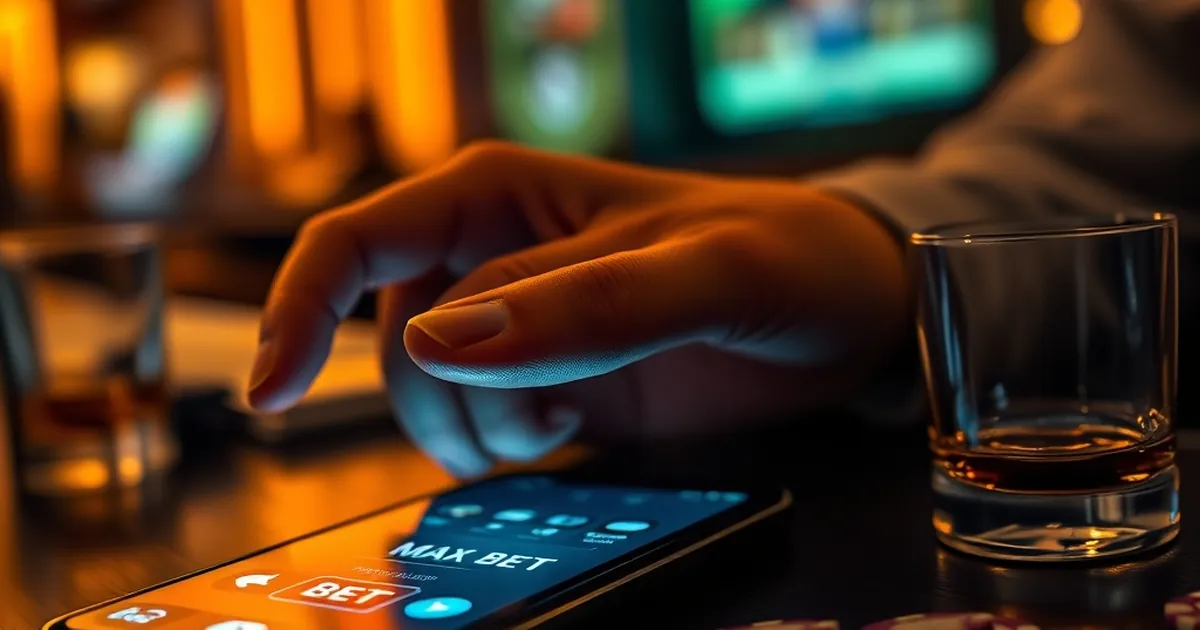
Max bet is supposed to be the button you press when you've already decided. On a growing number of slot builds, it fires without a confirmation step — and internal tap data shared by two studio-side sources puts double-taps on that button at 52% of presses. That's not players changing their minds. It's a UI telling them the first tap didn't register.
What the 52% actually measures
The figure comes from session logs, not a survey. A tap is logged as a double when a second press lands on the same button within 400ms of the first. On a responsive screen that's a plausible "did it work?" reflex, especially on mobile, where the button often sits under the thumb and gives no haptic feedback.
Two things make the number worth taking seriously. First, it holds across stake sizes — low-rollers double-tap about as often as high-rollers, which undercuts the idea that this is indecision at big bets. Second, it clusters on sessions where the spin animation is slow to start. The button looks dead for a beat, the player taps again, and on some builds the second tap queues a second max-bet spin at the same stake.
That's the mechanical risk. One tap, two spins, double the exposure — not because the player chose it, but because the interface was ambiguous for 300 milliseconds.
Why the confirm dialog got dropped
Confirm dialogs are friction, and friction shows up in drop-off metrics. A studio that removes the "Are you sure?" step can point to a cleaner funnel: fewer abandoned spins, higher spin-per-session counts, tidier engagement dashboards. None of those numbers distinguish a player who meant it from a player who tapped twice.
There's a fair argument on the other side. Experienced players find confirm dialogs patronising, and a max bet that needs a second screen slows down exactly the players who know their stake. The trouble is that the same design serves both the deliberate high-roller and the person who misread the stake field. Removing the dialog doesn't separate them.
The regulatory gap
Jurisdictions differ on what protection a max bet button needs. Some licensing regimes require a confirmation step above a set stake threshold; others leave it to the operator's own responsible-gambling policy. Where the dialog is optional, it tends to disappear quietly in a build update rather than in a changelog anyone reads.
The 52% figure is the kind of thing a regulator could act on cheaply — a rule that a max bet press must produce visible feedback within 150ms before a second press can register would solve most of it without adding a screen.
What would settle it
The honest answer is that nobody has published a clean study separating deliberate double-taps from accidental ones. Session logs can't tell you intent. What they can tell you is that a button with no immediate visual response gets pressed again, and that a second press sometimes costs money.
So the open question isn't whether 52% is high. It's whether a max bet button should ever be silent. If the first tap produced an unmistakable response — a stake flash, a locked state, a short haptic tick — the double-tap problem mostly evaporates, and the confirm dialog becomes a choice rather than a crutch. Until then, players who use max bet regularly should watch the first spin after a tap that felt ignored. If the stake looks wrong, stop and check the session history before the next press.