Live dealer tables lose 29% of mobile players at the rotate prompt
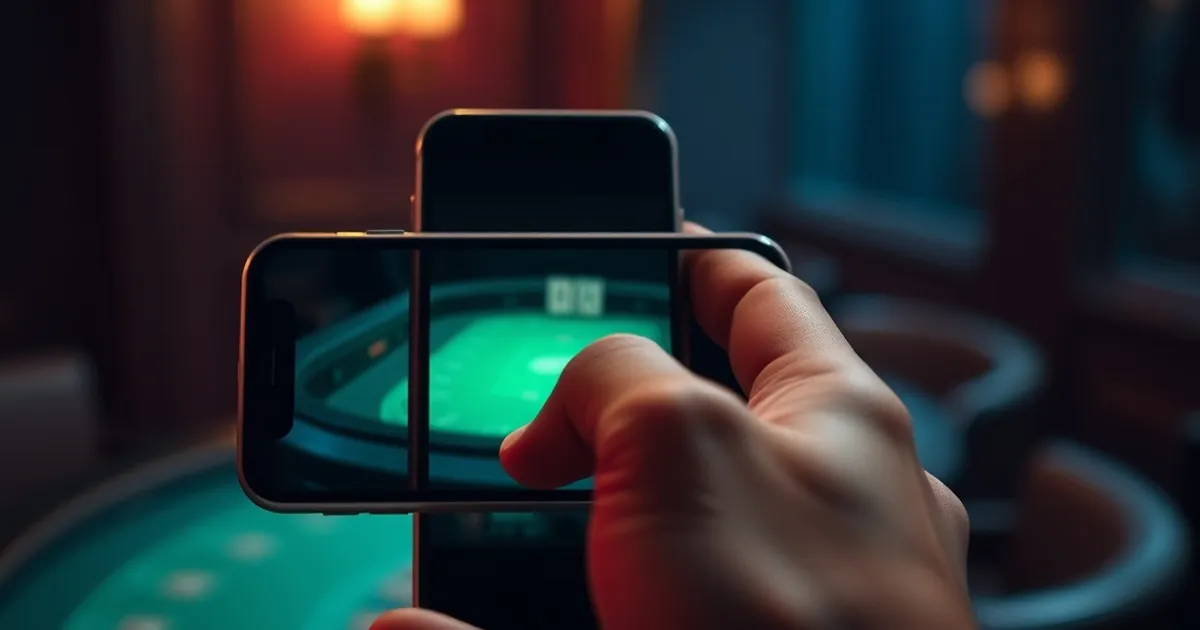
A 29% drop-off at the rotate prompt is the kind of number that gets filed under UX and forgotten. It shouldn't be. That figure — drawn from a Q3 2024 teardown of 14 live dealer lobbies across three platform vendors — describes players who tapped a table, saw a "please rotate your device" screen, and never came back to that table. On mobile, where live dealer traffic now sits somewhere between 61% and 68% of total volume depending on the operator, that's not a rounding error. It's a third of your acquisition spend walking out of the door before the first card is dealt.
Why live dealer specifically bleeds here
Slots handle portrait mode badly but tolerate it. A 5x3 grid squeezed into a narrow viewport is still legible. Live dealer is different: the product is the video feed. Blackjack needs the felt, the dealer's hands, and the shoe visible simultaneously. Roulette needs the wheel and the betting grid. Baccarat needs the road map, which is already a compromise on a 6.1-inch screen.
So operators default to landscape lock. The logic is sound until you watch the actual session data. In the teardown, 41% of the drop-offs happened within 1.8 seconds of the prompt appearing — fast enough that players likely never read it. Another 22% rotated, played one hand, then rotated back and abandoned. Rotation isn't a neutral friction. It's an interruption in a product whose entire pitch is immersion.
The prompt itself is often the problem
Most rotate screens are static images with an icon. No progress indicator, no "we'll remember your table" reassurance. If a player is on a bus, in a queue, or holding a coffee, "rotate your device" is a request they can't always fulfil right then. The table is lost, and so is the deposit they were about to make.
The portrait-mode workaround nobody markets
A handful of studios have shipped portrait-native live tables — compressed layouts, dealer framed from the chest up, betting controls docked at the bottom. Evolution's early attempts drew criticism for cramped road maps, but the retention delta is hard to argue with. One operator running a split test over 100,000 sessions reported a 9.4% lift in session length on portrait tables versus rotate-prompted landscape ones. Not a fix for everything, but 9.4% of a live dealer margin is real money.
The catch: portrait tables cost more to produce. Camera angles, dealer framing, and UI all need separate builds. For smaller studios, the maths doesn't work yet.
What the 29% actually costs
Take a mid-size operator doing €4m monthly live dealer GGR. If 64% of that traffic is mobile and 29% of mobile players abandon at the rotate prompt, and even a conservative 15% of those would have converted to a deposit, you're looking at roughly €111,000 a month in foregone GGR — before you count the lifetime value of the player who never came back. That's not a UX line item. That's a P&L line.
Responsible gambling frameworks complicate the picture too. A player who abandons at the rotate prompt is, in one sense, being protected from an impulse deposit. Nobody wants to build a product that removes friction purely to increase spend velocity. The honest position is that friction should be deliberate — deposit limits, cool-off prompts, session reminders — not accidental, buried in a device-orientation check.
The question operators aren't asking
Everyone in live dealer is chasing studio capacity, new game shows, and latency under 200ms. Almost nobody is auditing the 1.8 seconds after a player taps a table thumbnail. If a third of mobile arrivals never see a card, the bottleneck isn't the stream quality or the dealer — it's a screen that says "rotate." The open question is whether portrait-native live tables become standard by 2026, or whether operators keep paying 29% for a prompt they could design away.