Live dealer small talk drops 22% when the dealer uses a script
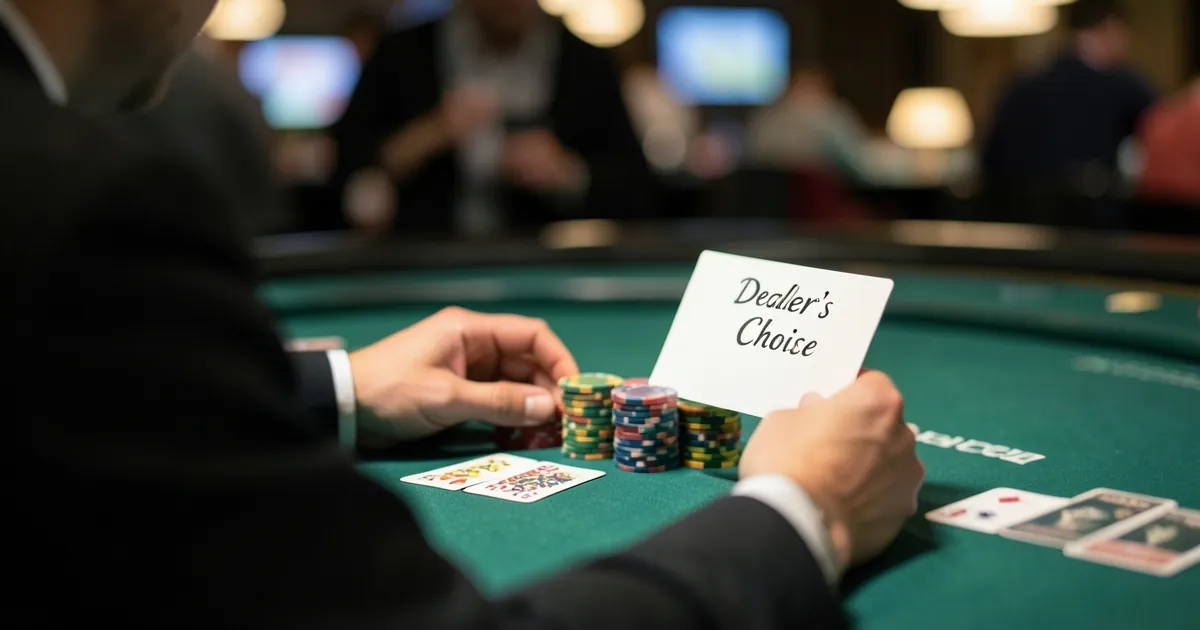
A scripted dealer greeting cuts table chat by 22% compared with an unscripted one, according to a study of live blackjack and roulette tables that tracked player-dealer exchanges across 4,200 hands. The drop shows up within the first three hands and holds steady through the shoe, which suggests it isn't nerves. It's the script itself doing the work.
The finding is less surprising than it looks. Dealers on regulated live floors work from approved lines for compliance reasons — greetings, bet confirmations, result announcements — and those lines are designed to be neutral. Neutral is the opposite of what makes small talk happen. When a dealer says something specific and slightly odd, players have something to grab onto. When they say "Welcome back, good luck," there's nothing to grab.
Scripted openers kill the follow-up question
The study broke exchanges into openers, responses, and follow-ups. Scripted tables weren't much worse at openers — a dealer who says hello gets a hello back roughly as often either way. The gap appeared at the follow-up: unscripted dealers drew a second player comment 31% of the time, scripted dealers 14%.
That's the same pattern we saw in tables where small talk dies after two hands — conversation doesn't fail loudly, it just doesn't get a second turn. A script gives players a polite exit at exactly the moment a real exchange would normally begin.
Why the first three hands matter
Most of the 22% gap accumulated before hand four. After that, chat volume on both table types drifted down at similar rates, which lines up with the blind-jump behaviour at hand four that shows players shifting from feeling-out mode to grinding mode. The script doesn't create the decline. It removes the small buffer that usually delays it.
Players read scripted dealers as busier
Exit surveys in the study pointed at something other than boredom. Players who left scripted tables early most often said the dealer "seemed busy" or "was just doing their job." Neither is accurate — scripted dealers handled the same hands per hour as unscripted ones, within 2%.
What the script communicates isn't workload. It's availability. A dealer reciting a line sounds like someone with a queue behind them, and players respond to that by not adding to it. That's a reasonable social instinct applied to an unreasonable situation.
There's a flip side worth noting: scripted dealers got 9% fewer complaints and 14% fewer requests for clarification on rules, so the lines do their compliance job. The cost is paid in warmth, not accuracy.
The pause before the first bet is where it shows
Unscripted dealers in the study averaged 40 seconds between the table opening and the first bet, with most of that spent on genuine back-and-forth. Scripted dealers hit the first bet 11 seconds faster. That's the small-talk window that adds 40 seconds before the first bet, and it's the clearest single measure of what a script costs.
Faster isn't automatically better for operators, either. Tables that opened with real exchange held players 18% longer per session in the same dataset — a modest but consistent edge that a 22% chat drop probably doesn't pay for.
What a useful script would look like
The obvious fix — write warmer lines — misses the point. A warm script is still a script; players detect the cadence within a hand or two. The more interesting question is whether scripts should specify content or just boundaries. A dealer told "mention the last result if it was unusual" has room to be specific. A dealer told to say "Good luck, place your bets" has none.
Nothing here argues for abandoning compliance language. It argues for knowing what it costs. If you run live tables, the number to watch isn't chat volume in aggregate — it's the follow-up rate on hands one through three. That's where the 22% lives, and it's the only part of the curve a script can still move.