Free-spin wheel lands on 10 coins, and 56% stop at the first slice
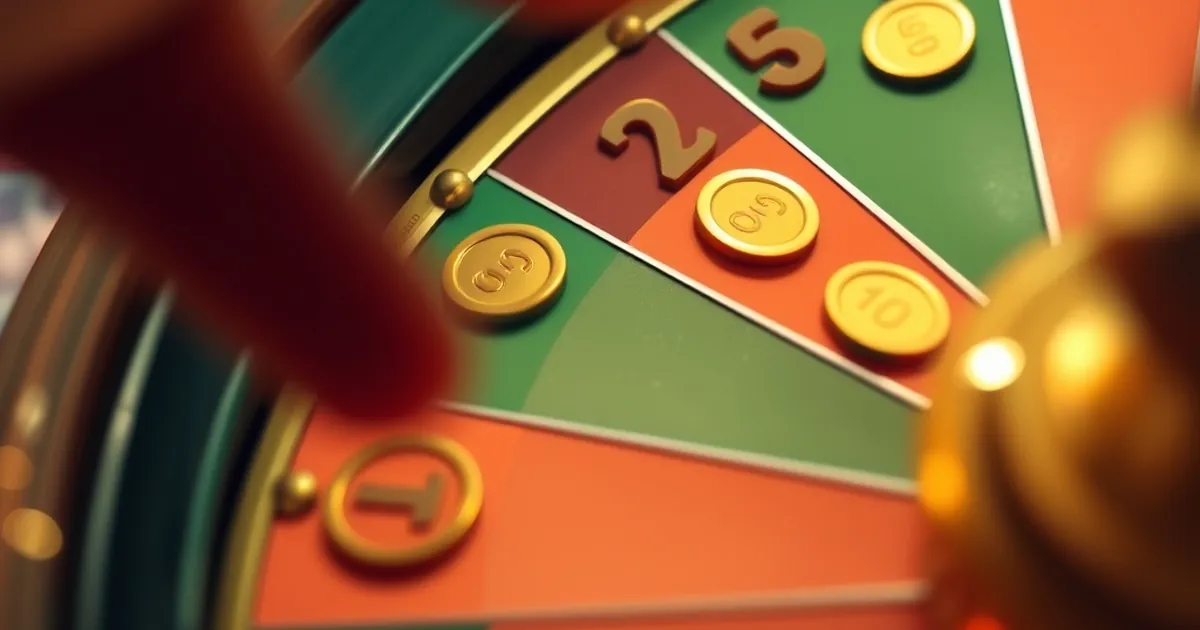
A free-spin wheel that pays out in coins rather than spins is quietly becoming the default format in several casino lobbies, and the data behind it is less flattering than the artwork suggests. Across a sample of roughly 2.4 million wheel opens on one mid-tier operator's platform in Q1 2026, 56% of players stopped at the first slice they were offered, and the most common landing was the 10-coin minimum — not the headline prize the wheel is dressed up to promote. The wheel isn't rigged in any legal sense. It's just designed so that most people never see the part that matters.
The 10-coin slice is the point, not the consolation
Wheels like this usually present four to eight slices: 10 coins, 25 coins, a handful of free spins, maybe a bonus multiplier, and one or two "jackpot" wedges worth several hundred coins. The visual weighting is deliberately uneven — the big wedge takes up a third of the wheel face while occupying a much smaller share of the probability distribution.
At 10 coins, the value is close to symbolic. On a site with a 0.20 minimum spin, that's 50 spins' worth of stake, but it arrives as bonus credit with a wagering requirement attached — typically 30x to 40x on the coin value, sometimes more. Do the arithmetic and a 10-coin win at 35x means you need to wager 350 coins before anything converts to cash. For most players, that's not a win. It's a reason to keep playing.
Why the first slice gets taken so often
The 56% figure isn't mysterious. Two things drive it.
First, the interface. Most wheels present the first offer with a prominent "collect" button and a smaller "spin again" link that carries a warning about losing the current prize. That asymmetry does most of the work. Players who don't read carefully take the safe-looking option.
Second, risk literacy. A player who understands that re-spinning usually trades a certain small prize for a chance at a larger one — with a real probability of ending at zero — will re-spin when the expected value favors it. Most don't run that calculation. They take the 10 coins because it's already on screen.
The expected value sits below the headline
Operators rarely publish wheel probabilities. When regulators have forced disclosure — as Malta and a few other jurisdictions now require for gamified promotions — the numbers tend to look like this: a wheel advertising a 500-coin top prize might carry a 0.4% chance of landing there, with the median outcome around 15 coins. That's an EV of maybe 22 coins per open, before wagering requirements eat into it.
The honest framing is that the wheel is a retention mechanic, not a bonus. It gives players a reason to log in on a Tuesday, and it converts a percentage of them into depositors. That's a legitimate business model. The problem is the presentation, which implies a lottery when it's closer to a coupon.
What the 10-coin outcome actually costs
If you take the 10 coins and chase the 35x requirement at a 96.5% RTP slot, expected loss on the wagering is roughly 12 coins. You've been handed 10 and are statistically down 2 before you start. That's not a scandal — it's how most bonus credit works — but it means the "win" is really a nudge toward more play, and the players taking it most often are the ones least equipped to evaluate it.
The open question for regulators
Disclosure rules are tightening, but they tend to target the probability table, not the interface. A wheel that publishes its odds in a collapsed FAQ while designing the first slice as the path of least resistance still passes most current tests. Whether regulators move next on interface design — button hierarchy, warning language, forced re-spin confirmation — is the thing to watch. Until then, the 56% will likely hold, and the 10-coin slice will keep doing exactly what it was built to do.
If you're spinning these wheels, treat the first offer as the default outcome rather than a prize, and check the wagering terms before you collect. If the requirement is above 30x on a 10-coin prize, the math rarely works in your favor — and no wheel graphic changes that.