Decision Fatigue Peaks at 3pm — Send the Easy Ask Then
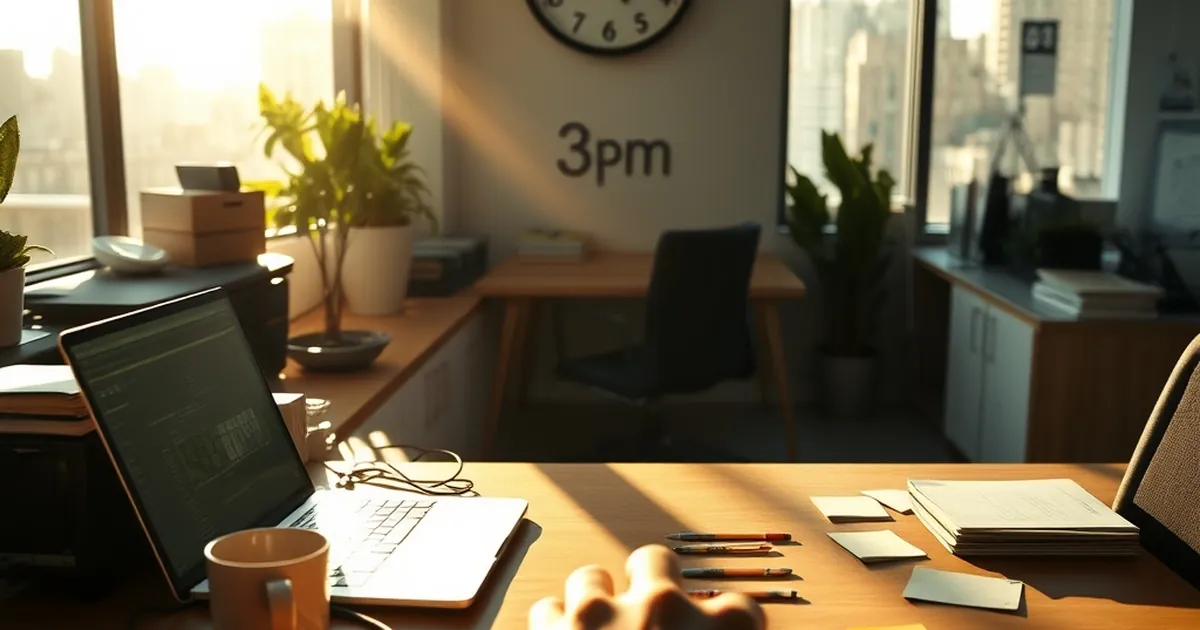
There's a specific hour when your subscribers stop reading carefully and start skimming. It's not first thing in the morning, and it's not late at night. It's mid-afternoon, right around 3pm, when the accumulated weight of a day's decisions turns even a simple yes-or-no into a chore. So what happens if you stop fighting that fatigue and start scheduling around it?
The psychology of the 3pm slump
Decision fatigue isn't a metaphor. It's the observable decline in our capacity to make good choices as the day wears on. Roy Baumeister's classic research on ego depletion showed that subjects who had to resist temptations or make repeated choices performed worse on subsequent self-control tasks. Later work complicated the mechanism, but the pattern held up in real settings: parole boards grant more favorable rulings early in the day, and the odds drop sharply as sessions drag on.
By mid-afternoon, most knowledge workers have made hundreds of micro-decisions. Their prefrontal resources are running low. This is when people default to the path of least resistance — which, in email terms, usually means "archive and forget."
Why the "easy ask" wins at 3pm
Here's the counterintuitive part. A tired reader isn't a lost reader. They're a reader with a narrower aperture. They can't evaluate a five-option pricing comparison or parse a 1,200-word case study. But they can tap a single button.
This maps onto what behavioral economists call choice architecture. When Daniel Kahneman describes System 1 and System 2 thinking, he's pointing at the same fault line: under load, we shift to fast, intuitive, low-effort processing. A one-click poll, a two-word reply, a "yes/no" RSVP — these are System 1 asks. A webinar registration with a form and a calendar hold is a System 2 ask.
Variable-ratio reinforcement, the same mechanism that makes slot machines and social feeds compulsive, also explains why a tiny, satisfying action can re-engage someone who's checked out. The reward doesn't need to be big. It needs to be immediate and easy to reach.
What a low-friction ask actually looks like
Picture a SaaS company sending a product update. At 9am, they send a detailed feature walkthrough with three CTAs and a demo link. Open rates are fine; click rates are flat.
At 3pm, they send something different: a single question. "Which of these two features would save you more time?" Two buttons. No form. No login. The click rate triples — not because the email is better, but because the ask fits the moment.
This isn't about dumbing down. It's about matching cognitive load to cognitive capacity. The same subscriber who ignores your 9am demo request will happily answer a one-tap question at 3pm — and that small yes builds the habit of engaging with you at all.
Timing is a lever, not a rule
The takeaway isn't "only send at 3pm." It's that your send time and your ask size are two variables you can tune together. A complex, high-consideration offer probably belongs in the morning, when attention is fresh. A quick pulse survey, a reaction request, a single-question reply prompt — those belong in the fatigue window.
Test it. Split your list. Send the same easy ask at 9am and 3pm, and watch whether the afternoon cohort converts at a higher rate. Most senders never isolate this variable, which means most senders leave the easiest win on the table.
The next frontier in email isn't better copy or prettier design. It's sequencing asks to the rhythm of a human day — and respecting that at 3pm, your subscriber has exactly one decision left in them. Make it a small one.